
If you spend enough time on the internet, you’ll eventually come across someone arguing that artificial intelligence is humanity’s greatest existential threat.
Others worry about rogue superintelligence, cyberattacks, or some futuristic doomsday scenario
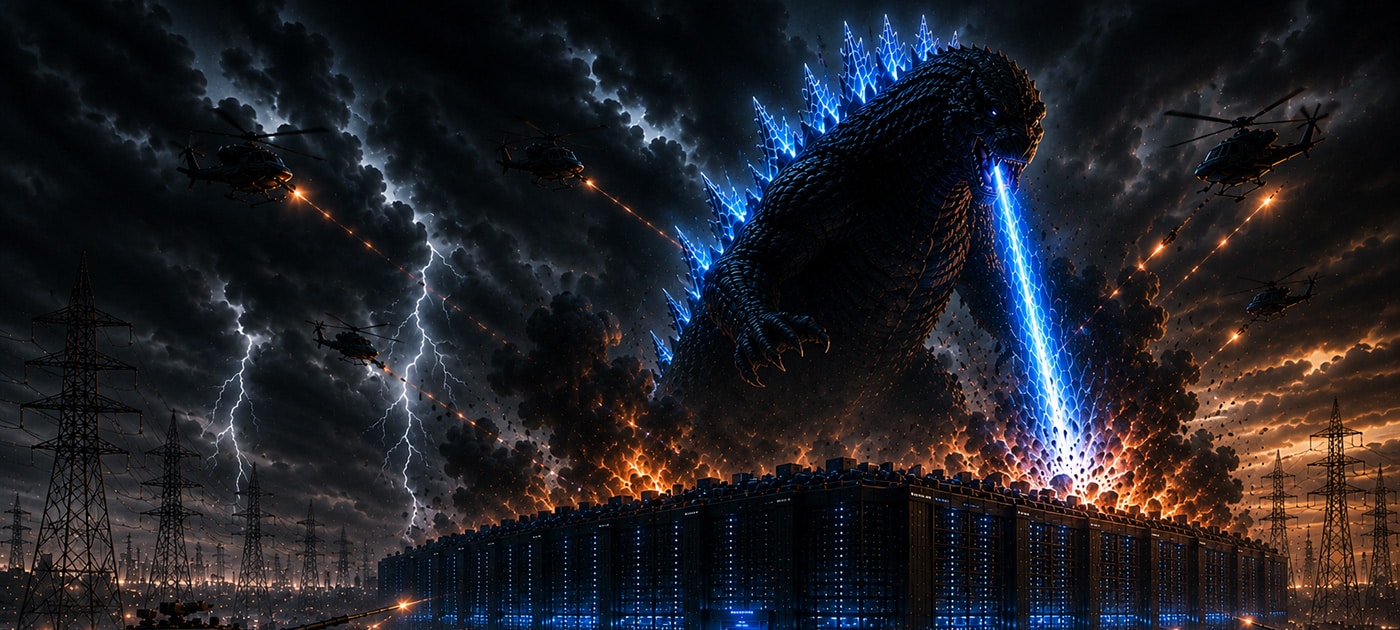
And if Hollywood has taught us anything, there’s always the possibility of a giant radioactive monster leveling critical infrastructure.
But the biggest threat to AI infrastructure isn’t Godzilla.
It’s power.
The Monster Nobody Talks About
While headlines focus on AI models, chips, and trillion-parameter breakthroughs, the industry is quietly running into a much more practical challenge.
Infrastructure.
Every AI model, every hyperscale data center, every inference request, and every training run ultimately depends on one thing:
Reliable electricity.
Without power, AI doesn’t exist.
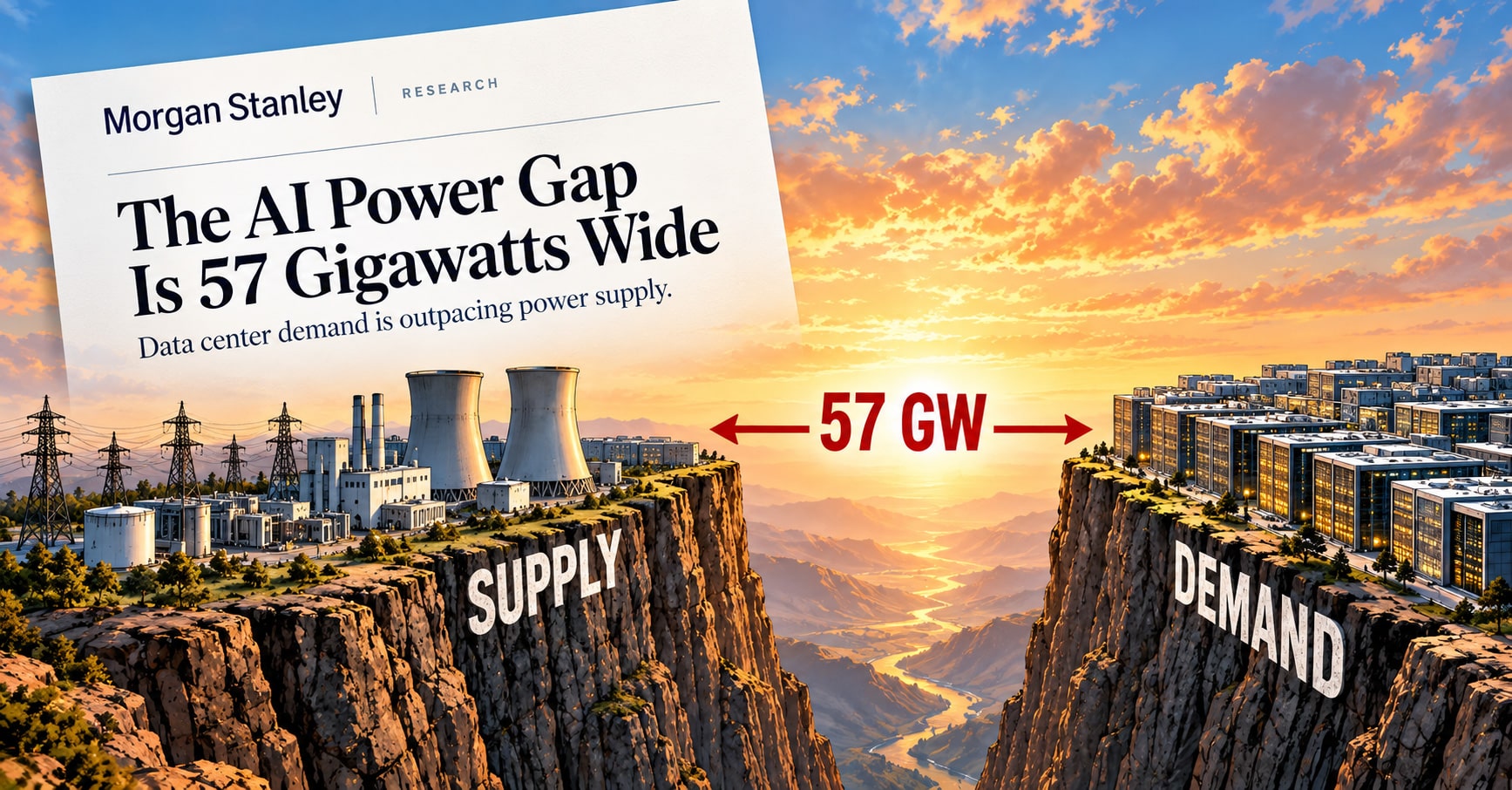
The challenge is that demand for AI infrastructure is growing far faster than the infrastructure needed to support it.
Interconnection queues are stretching into years. Utilities are struggling to accommodate new load. Communities are increasingly concerned about the impact of large-scale data center development on local resources.
The monster isn’t coming.
It’s already here.
Why the Industry Is Getting Creative
When engineers start placing data centers underwater, it’s a signal.
Not because underwater facilities are inherently better.
But because the industry is actively searching for solutions to power, cooling, and infrastructure constraints.
Around the world, developers are experimenting with new approaches to energy generation, cooling technologies, site selection, and infrastructure design.
The goal is simple:
Support the next generation of AI without overwhelming the systems around it.
The Future of AI Is Infrastructure
For years, the conversation around AI focused almost exclusively on compute.
More GPUs.
More processing power.
Bigger models.
Today, the conversation is changing.
Power availability, energy resilience, cooling capacity, permitting, environmental impact, and community acceptance are becoming just as important as the servers themselves.
In many cases, they may become the limiting factor.
The next generation of AI infrastructure won’t be defined solely by the intelligence inside the data center.
It will be defined by the infrastructure surrounding it.
Designing the Opposition Out Before It Starts
At Next Century Power, we believe the most successful AI infrastructure projects will be those that address these challenges from the beginning.
Independent power generation.
Resilient infrastructure.
Responsible resource management.
Community-compatible development.
Because the goal isn’t simply to build larger data centers.
It’s to build infrastructure capable of supporting the future.
And that’s a much bigger challenge than Godzilla.