
President Trump signed an executive order today titled Ushering in the Next Frontier of Quantum Innovation, and by the standards of federal technology policy, it is genuinely ambitious. The order creates the Quantum Computer for Application Development and Discovery Science effort, known as QC-ADDS, with a stated goal of delivering at least one quantum machine powerful enough to “initiate the era of quantum-enabled scientific discovery” to a Department of Energy facility. It tasks DOE with publishing technical specifications within 90 days, directs multiple agencies to develop 5-year quantum plans, and establishes national workforce institutes, a new counterintelligence effort, and an international initiative called Pax Silica to manage export controls and allied collaboration.
It is, as one informed observer put it, “a whole-of-government push” to keep the U.S. ahead in quantum information science, similar in structure to prior AI policy pushes from the same administration.
Here is what the order does not include: new appropriations. The text is explicit that all of this is “subject to the availability of appropriations,” meaning it leans on existing budgets and a $2 billion program already in place. The targets are set by officials rather than binding legal text, which means the bar for declaring success can shift. Industry roadmaps put genuine large-scale fault-tolerant quantum computing in the 2029 to 2030s range. The 2028 sensor fielding target in the order is aspirational.
What Gets Left Out of the Quantum Conversation
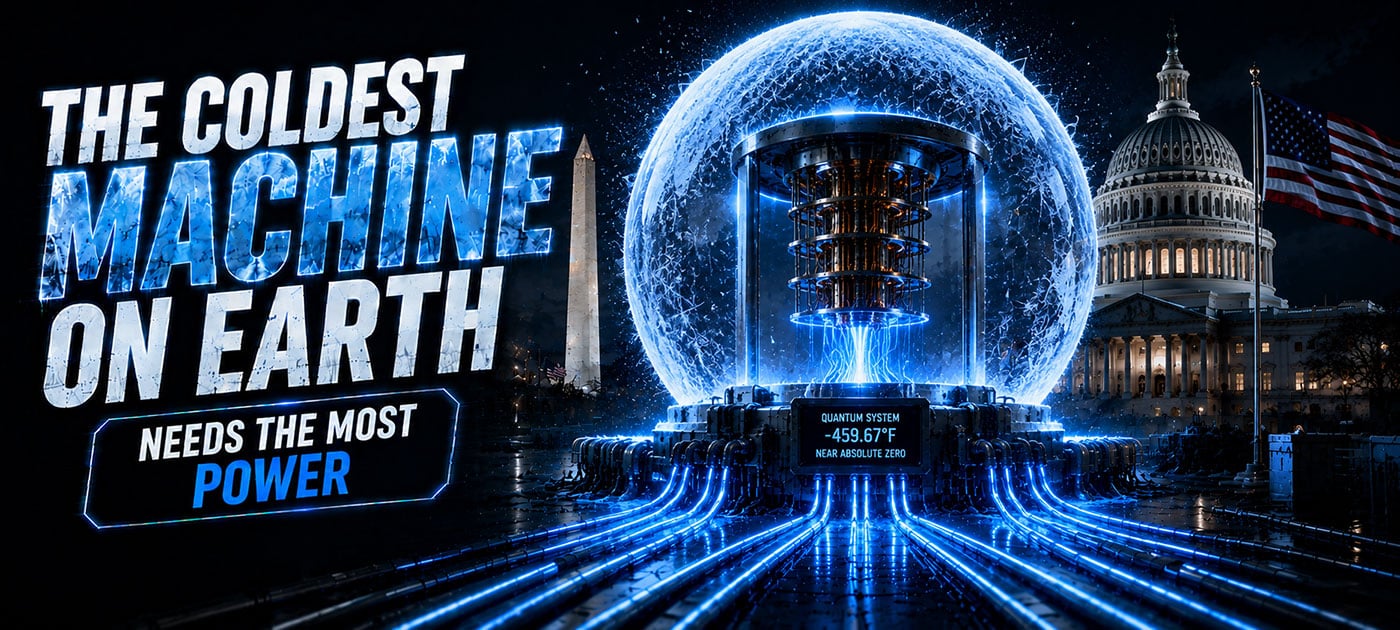
The policy conversation around quantum computing focuses almost entirely on qubits, error correction, and algorithmic breakthroughs. That is the right conversation to have. But it tends to skip over a mundane and completely unsolved problem: quantum computers at scale require extraordinary amounts of stable, uninterrupted power.
Quantum machines operate at temperatures near absolute zero. The cryogenic systems required to maintain those conditions are energy-intensive and intolerant of power fluctuations. A momentary dip in supply does not slow down a quantum computation. It destroys it. The hardware is fragile in ways that conventional data center infrastructure is not, and the power requirements reflect that.
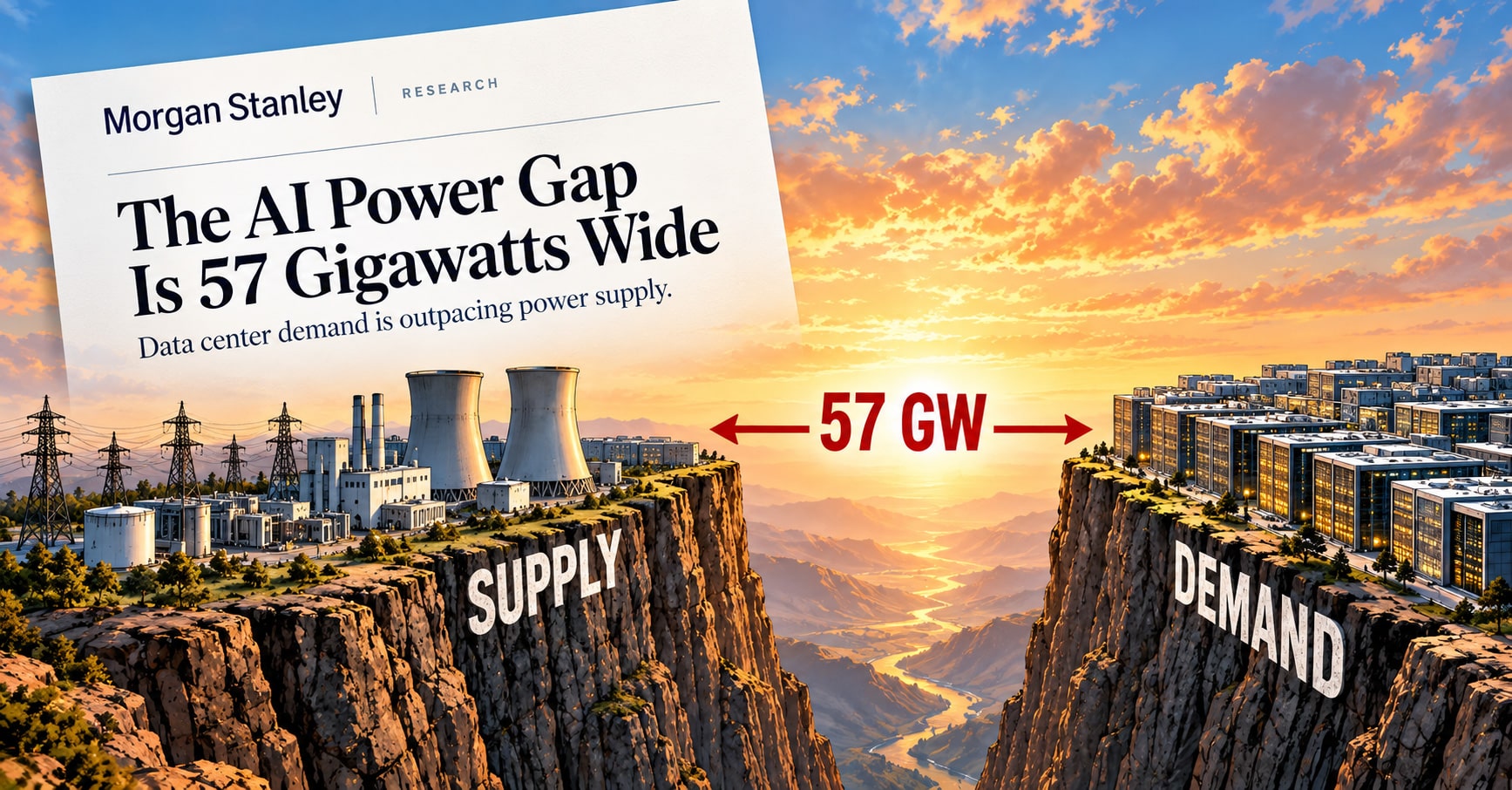
The EO designates DOE facilities as the delivery point for the first QC-ADDS system. DOE facilities are serious institutions with serious infrastructure. They are not, however, known for their ability to rapidly stand up gigawatt-scale dedicated power on a compressed federal timeline, especially with no new budget to work with. And given the national security framing of this order, including the expanded counterintelligence scope and the FBI threat-sharing provisions, these machines will need more than just reliable power. They will need power that is isolated, secure, and not dependent on a shared grid that represents a potential attack surface.
The Infrastructure Layer Nobody Is Planning For
Next Century-Power is already engaged with defense and mission-critical installations. The reason is straightforward: the requirements for those environments match what we build. Dedicated, single-tenant power. Islanded microgrid configurations that do not depend on the grid for continuity. Four-nines uptime targets with built-in redundancy. Long-term contract stability that lets operators plan on decadal timescales rather than around the uncertainty of utility interconnection queues.
We start with large-scale gas turbine installations at 1GW and above, designed to come online quickly. We then transition sites to our core long-term product: a 1.2GW pod system of four integrated 300MW small modular reactors, with carbon capture built in from the start. The SMR timeline, targeting the early 2030s for wide deployment, lines up almost exactly with where industry experts place the arrival of fault-tolerant quantum computing at meaningful scale.
The quantum race is real. The EO is a serious signal that the federal government intends to compete. What is missing from the policy conversation is the same thing that is missing from the AI and data center conversation: a credible plan for the power that makes any of it possible.